What is wilderness? Before you read any further, I want you to stop and take a moment to define what you think wilderness is (without Googling!). There’s no wrong answer. The concept of wilderness can mean many things to many people depending on your culture, heritage, personal experiences, or where you work. I’ve heard most folks throw around the word wilderness to describe a natural landscape that’s seemingly uninhabited by humans or lacks any type of development or infrastructure.
But did you know that in the eyes of the federal government, Wilderness (with a capital W) is a legal term that comes from a law enacted back in the 60s? That law is called the Wilderness Act of 1964.
The goal of the Wilderness Act is to preserve the “wilderness character” of our landscapes, a holistic concept that values:
• Biophysical environments primarily free from modern human manipulation and impact
• Personal experiences in natural environments relatively free from the encumbrances and signs of modern society
• Symbolic meanings of humility, restraint, and interdependence that inspire human connection with nature1
• Enjoying nature at the speed of nature
History of the Wilderness Act of 1964
The 20th Century, specifically the decades of the 1950s and 1960s, were a pivotal time for the environmental and conservation movements. The baby boom after World War II combined with the explosion of the automobile industry and rapid development of transportation systems led to fears and concerns about pollutants and environmental degradation2. Attempts were made to address the harmful effects of pollutants on “wilderness” areas, but those attempts weren’t enough and America’s vast swaths of undeveloped land were still under threat.
Former Wilderness Society Executive Director, Howard Zahniser, had grown particularly frustrated and disillusioned by fragmented and half-hearted attempts at landscape conservation. In 1955, Zahniser sat down and created the first draft of what would soon be called the Wilderness Act. Eight years and 66 revisions later, then President Lyndon B. Johnson signed the Wilderness Act into law on September 3rd, 19643.
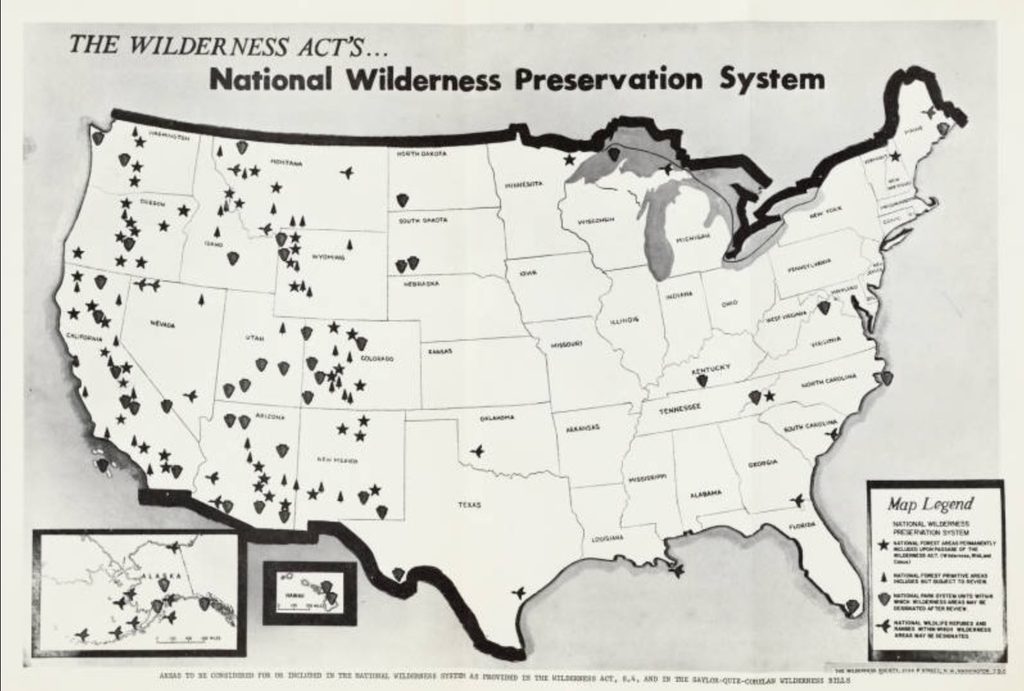
The Wilderness Act of 1964 became the governing law that continues to guide the management of the National Wilderness Preservation System (NWPS), a network of federal lands and waters designated by Congress as Wilderness Areas1. Four federal agencies: the National Park Service, the US Forest Service, the US Fish and Wildlife Service, and the Bureau of Land Management are responsible for managing and conserving America’s 806 federally designated Wilderness Areas2.
First Wilderness Area
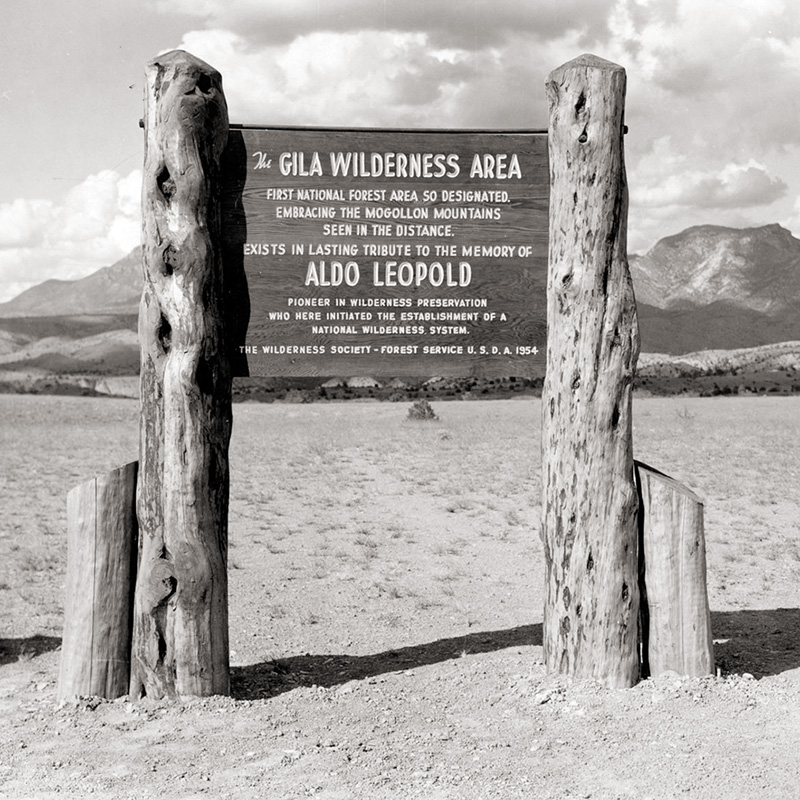
Four decades before the Wilderness Act, conservationists like Aldo Leopold were already thinking about the idea of Wilderness. Upon his insistence, the Gila Wilderness was established right here in New Mexico in 1924 as the first-ever Wilderness Area in the world4.
What Is and Isn’t Allowed
When a portion of land gets designated as a Wilderness Area, it also gets a special set of laws and regulations that differ from non-designated areas.
What Isn’t Allowed5
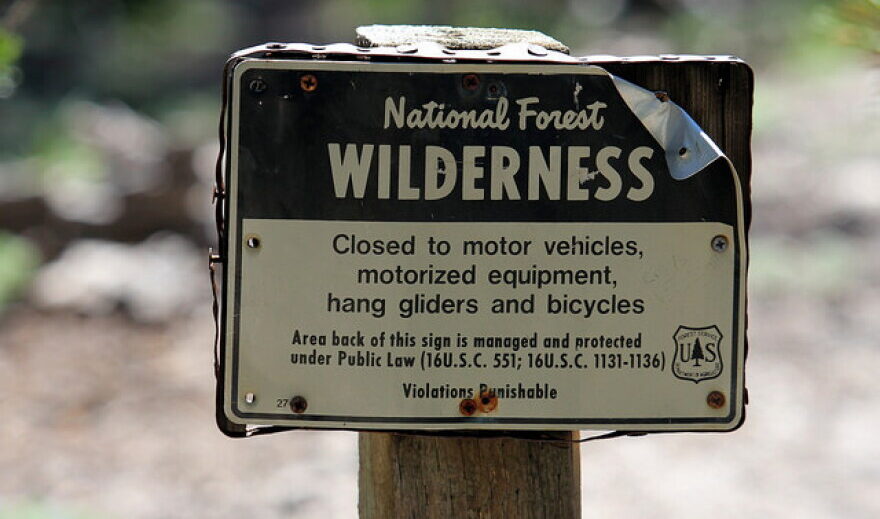
• Motorized or mechanized transportation, including bicycles and even wheelbarrows!
• Motorized equipment and tools (no drones, chainsaws, power drills, etc.)
• Building permanent structures, temporary structures and shelters are allowed as long as you break them down when you leave
• Group sizes of more than 12-15 (this isn’t in the original Wilderness Act but has become a policy adopted by federal land managers, the number differs by Wilderness Area)
• Operating a commercial enterprise, no logging or oil and gas drilling
• No construction of temporary or permanent roads
• No landing of aircraft, including drones and paragliders, and no dropping off or picking up any materials, supplies, or persons by means of aircraft, except in emergencies involving public safety or property loss6
What Is Allowed7
• Non-motorized recreational activities that don’t involve wheels, activities like horseback riding, hiking, backpacking, camping, climbing
• Hunting and fishing
• Photography
• Nature and scientific study
• Grazing
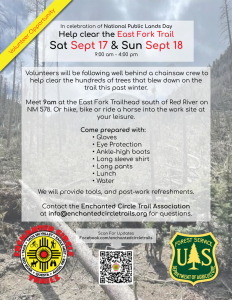
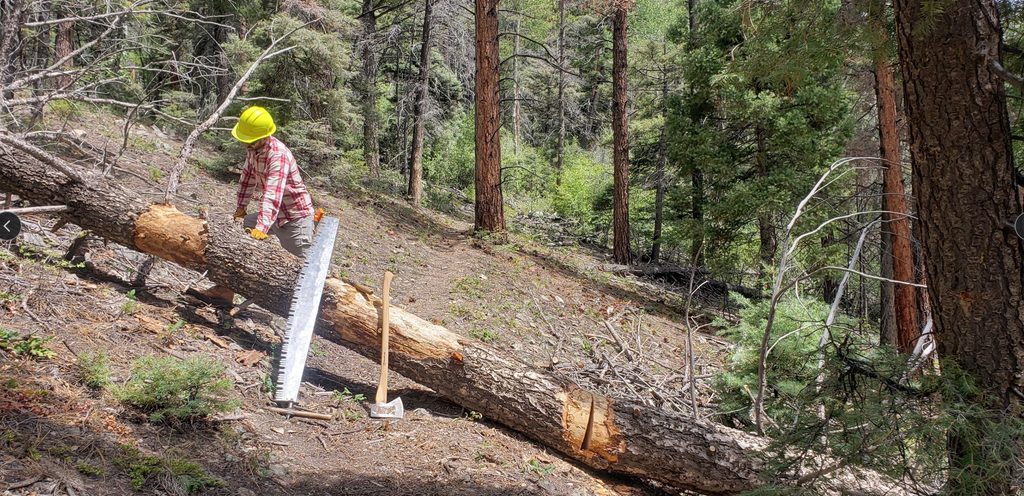
• Trail work performed under human or pack stock power without mechanical advantage
• Any other activity that isn’t prohibited under the list above
Enchanted Circle Wilderness Areas
Here in the Enchanted Circle, we’re fortunate to have three awe-inspiring Wilderness Areas right in our backyard.
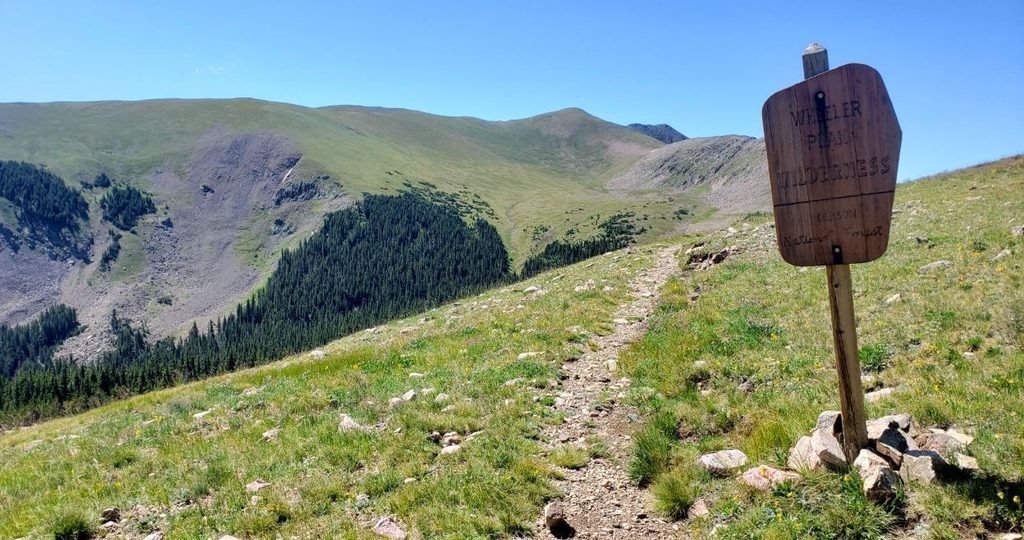
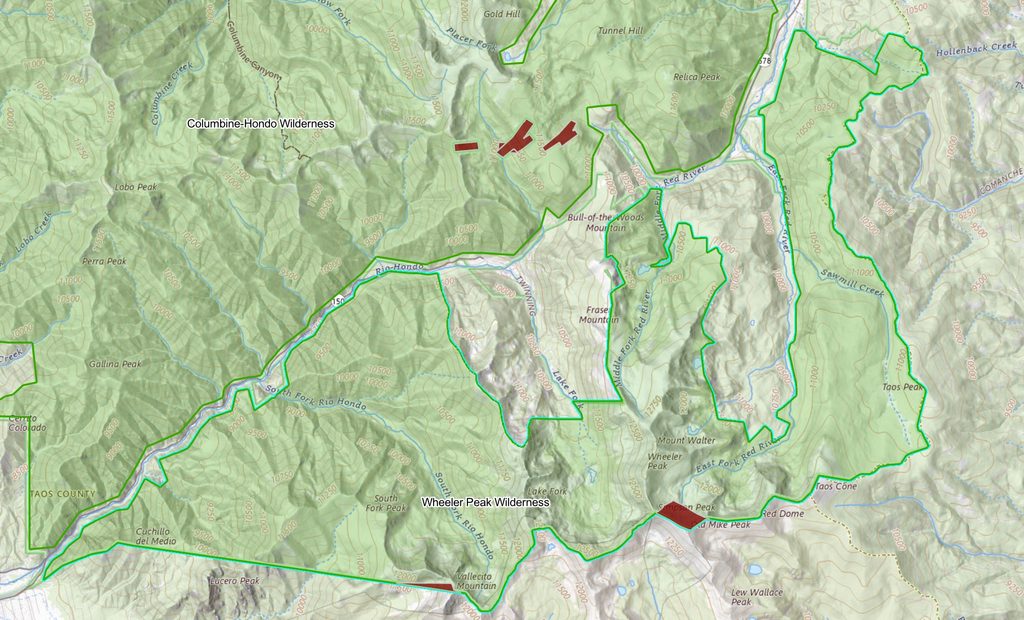
Wheeler Peak Wilderness
Congress designated the Wheeler Peak Wilderness in 1964. It contains almost 20,000 acres of spruce-fir forests, rare alpine tundra, sparkling sub-alpine lakes, and abundant wildlife.
It’s situated in the Sangre de Cristo (blood of Christ) Mountains northeast of Taos in the Questa Ranger district. The Wheeler Peak wilderness is the Carson National Forest’s most heavily used wilderness; hikers and recreationists flock to the area with the lofty goal of standing atop New Mexico’s highest point: Wheeler Peak at 13,161 feet. For being New Mexico’s highest peak, Wheeler is fairly accessible to most hikers because it requires no mountaineering skills and can be summited with pure grit and determination.
Check out our guide for more information on trails, flora, and fauna in the Wheeler Peak Wilderness.
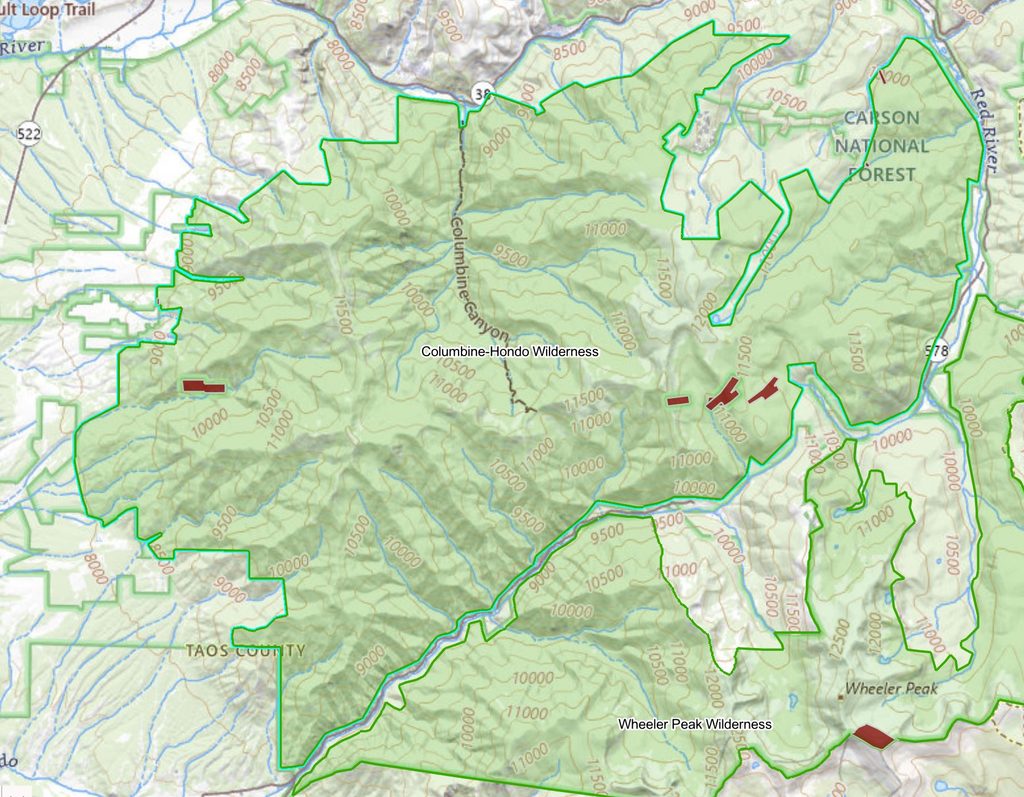
Columbine-Hondo Wilderness
Congress designated the Columbine-Hondo Wilderness in 2014, making it the Carson National Forest’s youngest wilderness area. It contains 44,698 acres of lush forests, alpine meadows, babbling brooks, and abundant wildlife. It’s situated in the Sangre de Cristo (blood of Christ) Mountains northeast of Taos in the Questa Ranger district
The abundance of trails in the Columbine Hondo Wilderness are part of a historic trail system developed in the late 1800s during the New Mexico Gold Rush. Names like Gold Hill and Placer Fork and leftover artifacts from the mining boom provide insight into historic activities that once took place here.
There are no longer any active mining claims in the Columbine-Hondo Wilderness. These trails are now used by recreationists searching for peace and solitude in the high mountains and to escape the hustle and bustle of daily life.
Check out our guide for more information on trails, flora, and fauna in the Columbine-Hondo Wilderness.
Latir Peak Wilderness
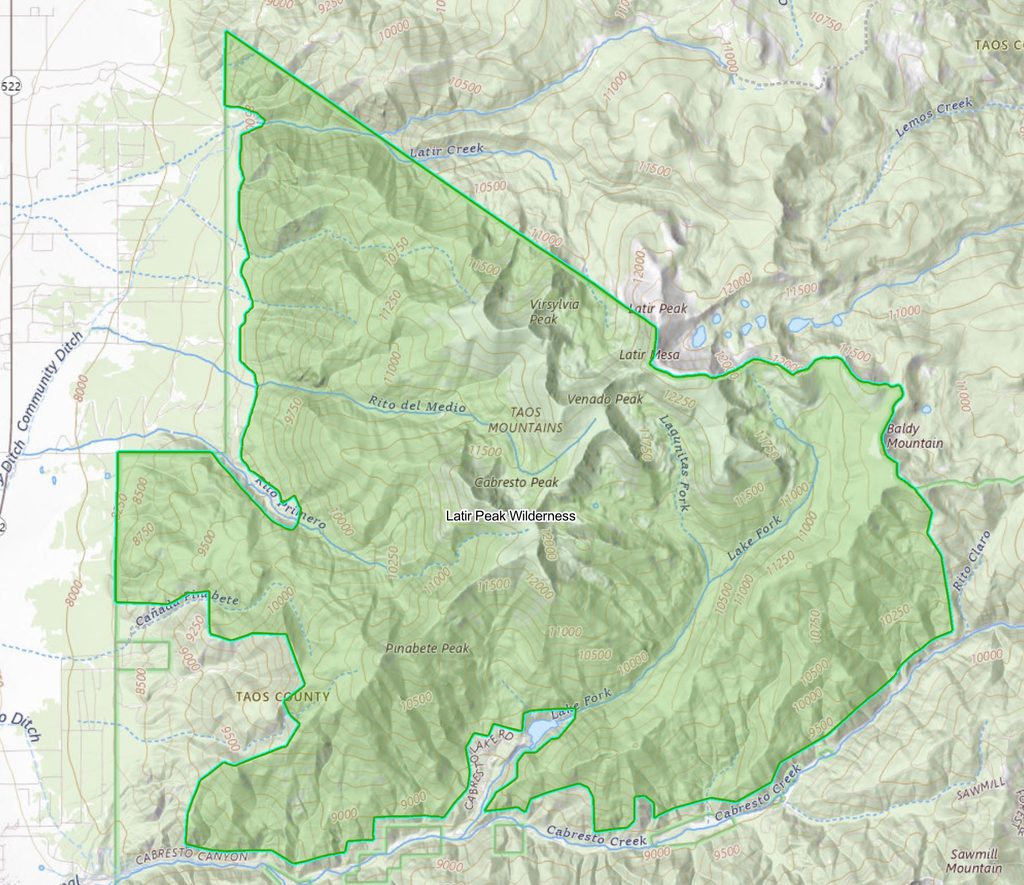
Congress designated the Latir Peak Wilderness in 1980. It contains 20,420 acres of deep forest, pleasant meadows, and alpine tundra.
This remote area gets less use than our other two Wilderness Areas, and as a result, wildlife romps around in abundance. If you’re lucky you may be able to see mule deer, black bears, badgers, beavers, bobcats, coyotes, ferrets, foxes, mountain lions, marmots, martens, or muskrats.
Most visitors utilize the Lake Fork trail, a moderate trail that begins at Cabresto Lake and continues five miles to Heart Lake, named for its romantic shape, situated at 11,520 feet. More ambitious hikers can continue past Heart Lake into the alpine tundra and summit one or all of the three peaks exceeding 12,500 feet.
Critiques of the Concept of Wilderness
It’s important to note that despite the contemporary, virtuous ideals of Wilderness, folks have criticized the concept as being deeply rooted in colonialism and racism, excluding cultural and religious practices that aren’t rooted in Christianity, and enforcing the idea that humans should be separate from nature and the landscape despite indigenous communities living on and altering these landscapes for tens of thousands of years8.
As early as the first quarter of the 20th century, right when the environmental movement was beginning to gather steam, early environmentalists were suggesting alternative names, like “biologic reserve” or “biodiversity reserve”, that they thought better represented the purpose that “Wilderness Areas” sought to serve9. That push still continues today as folks seek to redefine and reconceptualize these areas in order to move away from the problematic origins of Wilderness.
Other Resources
- Podcast that takes a deep dive into the history and concepts of Wilderness: How Wild : NPR
- Free trainings and education: Arthur Carhart National Wilderness Training Center
- Current threats to NM’s Wilderness Areas: New Mexico | The Wilderness Society
- Wilderness Connect
References
- Wilderness FAQs – Wilderness (U.S. National Park Service)
- Wilderness Act – Wikipedia
- The Wilderness Act | The Wilderness Society
- Gila Wilderness & National Forest | New Mexico Guide
- Wilderness Act of 1964: What It Protects, Prohibits, and Allows – FedLaws
- Vehicle Intrusions
- Can I Recreate in “Wilderness” Areas? – Tread Lightly!
- The Problem with Wilderness | UU World Magazine
- Contemporary criticisms of the received wilderness idea | US Forest Service Research and Development